Imagine never having done drugs in your life. Now imagine finding yourself in the middle of a custody battle and having the state take your children away from you because a shady lab owner was trying to cut corners. You see, falsifying results is cheaper than actually paying for the tests to be run. That’s what happened to Grace Locke:
In 2017, Grace Locke of Newton had her two children taken from her due to her drug use. She eventually entered rehab following an arrest. By 2019, Locke said she was clean and wanted to be reunited with her two older children after giving birth to her third child. But when she met with her case workers from the Department of Human Resources in Dale County to talk about a plan to regain custody, she received the news that her latest drug test had come back positive for methamphetamine and her baby’s test showed exposure. Her 3-month-old baby was taken from her during the meeting.
It goes without saying that bullshit erodes the foundations of everything in society, but we’re going to keep saying it anyway. When people are allowed to make up their own facts, lives are destroyed.
That, of course, never stops people from deliberately misrepresenting the findings of a research paper most people will never actually read.
Since the beginning of this pandemic, everyone who knows what the hell they’re talking about has been hammering the message into the heads of those who do not, that wearing face coverings is about protecting other people from your respiratory droplets, much more than protecting you from the respiratory droplets of other people. This message has been all but dropped on major cities in the form of leaflets by public health communicators, and yet, bad faith operators more beholden to the bafflingly-politicized movement against giving a shit about other people still persist to focus on what the masks do or do not do for them.
The implications of this are, of course, obvious to the point of not needing to be stated. So here’s a meme, because frankly, an explanation for the benefit of those who don’t immediately grasp it is not worth typing.
The Danish Study
It took less than an hour from the time “Effectiveness of Adding a Mask Recommendation to Other Public Health Measures to Prevent SARS-CoV-2 Infection in Danish Mask Wearers – A Randomized Controlled Trial” was published for the Pro-Virus constituency to descend on social media like the plague rats they are, infested with a misunderstanding of the paper and a desire to infect others with their stupidity.
Table 2 from the study
Bullshit Bullet Point Breakdown
1. The study was ridiculously underpowered
Without getting into statistical concepts like β or Cohen’s D that will make the average person zone out and go back to watching videos of people kicking each other in the heads, note that the researchers themselves observe that of the people in the treatment group (ie. the people who wore masks, as opposed to those who didn’t in the control group) only 46% of them actually wore the mask as instructed.
This would be like testing whether drinking water can quench thirst and having half of the “water drinking” group dump said water onto their heads instead of into their mouths.
2. The study only focused on the effectiveness of masks to protect the wearer from others
We’re going to keep beating this dead horse until it’s a nice puree fit for children’s arts and crafts projects. The people trying to promote this study as vindicating their refusal to wear masks are, again, misdirecting everyone from the fact that masks aren’t about protecting you from others, they’re about protecting others from you.
Science, however, isn’t as concerned with the petty battles being waged in the public discourse (don’t go there, we know), so all too often well-meaning researchers are completely obvious to such things pursue an understanding of a subject without any consideration for how it may be misinterpreted or abused. In this case, barring any forthcoming evidence to suggest otherwise, these researchers simply wanted to get a better handle on whether or not masks protect you from others. And that’s how it should be, but the works of people acting in good faith will never not be exploited by those operating in bad. So here we are.
3. The study reinforces the damn point that you can’t protect yourself from anti-maskers by wearing a mask
via Reuters’ summary
Did I mention we were going to keep beating that dead horse enough yet? There is missing the point deliberately for a host of reasons, including and especially out of fears of a loss of status and/or followers over bucking a narrative and putting yourself in the out-group by calibrating your grasp of a subject more towards objective reality. Then there’s just being a mark for those whose livelihoods are made playing that game. Both are taking place here, but the critical takeaway is this:
The study actually reinforces the urgency with which everyone needs to be wearing masks to prevent infecting others by making it clear how easy it is for a small group of recalcitrant quarter-wits to infect those who actually give a crap about other people. If this disease only affected the idiots who refuse to take it seriously, it would be a self-correcting problem. But the universe is arbitrary rather than just.
4. Don’t take ANYONE’S word for it (even ours): read the study yourself
Science is like playing that old game of “telephone” where by even the second iteration the message can get garbled. And science in the modern age of weaponized bullshit is like playing the telephone game with that one kid whose parents never loved them so they seek to ruin any game they mistakenly get invited to participate in by otherwise well-meaning people who don’t know better.
Strangely enough, you’re still going to get ridiculed and called a Covidiot.
Here’s a masterclass in how to pander to your smooth-brained followers while knowing full well your take is bullshit and hedging your bets in case you end up dying from this. That law degree Ben has sure is paying off.
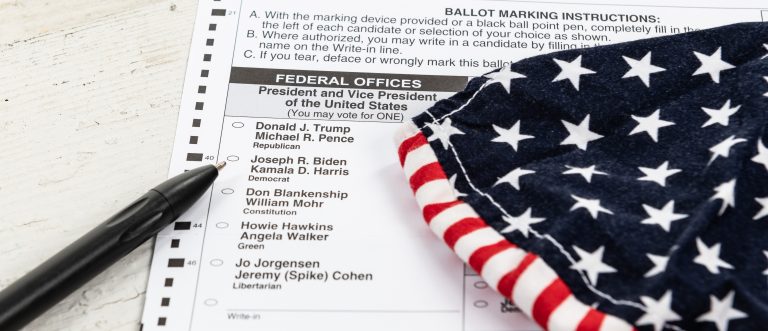
The American election process has always been akin to a hotly contested sports event. Two rival teams with approximately equal resources line up and slug it out for the win while millions of fans watch with baited breath and root for their preferred side with the kind of fervor and zeal that ought to make free-thinking folks a touch nervous. Obviously, the stakes of the US presidential election are much higher if you value things like human dignity, representative government, and the sanctity of facts. But other than that the similarities between a good old-fashioned election and a Yankees/Red Sox World Series are striking enough to make a smart person weep like a lost child. This year’s tournament of mediocrity has proven to be no different, except perhaps in the level of fervor and zeal involved. It has been a very long time since the American electorate has been this riled up about the contest. In fact, no presidential candidate in history has garnered more votes than our 2020 contestants.
I will not belabor the reasons for this year’s elevated level of emotional uproar. I lack both the time and ennui to slog through it without guzzling a bucket of Scotch. Suffice it to say that lots of people are pumped up for lots of reasons, and precious few are willing to discuss the merits of those reasons without spewing a whole lot of expletives, ad hominem, and COVID-laden rage-spittle. Thanks to the internet and a disappointing trend favoring emotion over logic, the combined forces of confirmation bias and echo chambers have produced an alarming crop of magnificent BS about our latest election night. You may have seen some of this drek smeared across your Twitter or Facebook pages, or perhaps you dove too deeply into a subreddit and got some of that stinky brown nonsense on your digital shoe. We here at Bullshido are happy to be the muddy lawn of the internet and help scrape some of that excrement off before you track it home.
The Terror of the Mail-in Ballot
Pretty sure this dude is going to fuck that mailbox.
As I sit here to type this up, the 2020 US presidential election has still not been officially decided. This may feel strange to a whole lot of folks who grew up in a digital world of gigabit speeds and instant gratification, but in ye olden days of yore it took weeks unto months to gather and tally all the votes cast across this great nation. It’s a big place, and it’s full of voters. Imagine that.
With the small issue of a global pandemic in play, a large portion of voters availed themselves of the mail-in ballot in lieu of physically going to the polls this year. There are a few half-assed conspiracies and accusations with respect to mail-in voting floating around and I’m going to lump them all into this section because I don’t want to repeat myself any more than I have to. The crux of the issue lies in the perceived risk of fraud that not showing up to vote in person might engender. The risk itself? Laughably small, of course.
Right off the bat, this argument only comes up when it might hurt one party more than the other. Mail-in or absentee voting has been a legal and accepted practice in every American election, literally. Even before we were a country, men in the colony of Massachusetts could vote from home if they were vulnerable to “Indian attack” or otherwise unable to get to a polling station. During the Civil War, mass absentee voting was critical in Abraham Lincoln’s victory over McClellan.
1978 was the first year people could vote via mail without an excuse in California. Other states soon followed suit. Mail in voting is easy, and in a big complex world, sometimes the easiest way is the best way to get a complicated task accomplished. For some reason in 2020, the concept of mailing in a ballot has once again become controversial. Wait. I misspoke. It’s never been controversial before. It was just a thing you did when you couldn’t get to the polls because of a war or weather or plague made leaving the house a bad idea. While voter fraud is a real thing and should be stomped out, voter fraud via absentee ballot has never been more prevalent than in-person voter fraud. Neither of which happens all that much.
Jared Kushner and Ivanka Trump holding up their mail-in ballots
So the practice of mailing in your ballot is older than the country itself and has been historically problem-free. But still the angry Tweets keep coming. Why? There have been accusations from conservatives that the Biden campaign would be able to “stuff” the ballot boxes with fraudulent absentee ballots. One might ask how this potentially catastrophic outcome has never been considered before. Obviously, it has. In an August 26th press briefing on this very topic, senior FBI officials said the following:
“We have not seen, to date, a coordinated national voter fraud effort during a major election. It would be extraordinarily difficult to change a federal election outcome through this type of fraud alone, given the range of processes that would need to be affected or compromised by an adversary at the local level.”
Stealing an election via ballot-stuffing is harder than it looks, people. Voting is closely watched, and while screw-ups do happen, there is no practical way to apply more votes to an election than there are voters. Can ballot-stuffing happen? Sure. Does it happen? Rarely, and mostly in small local elections where scrutiny is easier to avoid or bribe. Has ballot stuffing ever changed the outcome of a major election? Not in the USA. Ballot-stuffing is a terrible way to steal an election because getting caught is extremely likely. Historically, the most effective way to secure an election in the US is to go about it the old-fashioned way: Selling yourself to corporate special interests and letting them buy it for you.
So why is absentee voting such a big deal now? Where this all gets a little dicey is when one party’s candidate has made it very clear that they do not think going out to vote is a bad idea, while the other side has perhaps advised voters to minimize their exposure to viral pandemic via mail-in ballots. If you are the candidate encouraging your supporters to brave said pandemic getting to the polls, then you have a very large vested interest in disenfranchising your opponent’s mostly mailed-in votes.
Another issue in 2020 revolves around the problem of when to stop counting those mail-in votes. This is not really an issue, of course. Any vote postmarked by November 3rd is a legal vote and gets counted. Period. There is a pervasive myth floating around that somehow certain jurisdictions are counting “late” votes. This is a spurious accusation with no merit whatsoever. Ballots are counted and voted under strict supervision. It’s just not happening, and chanting “Stop the count” outside an election center is not going to make you sound any smarter..
So the answer to when we stop counting votes is always: “When we’ve counted them all.” If that takes three days or a week or whatever, it does not matter.
Magic Ballots!
Let’s talk about Matt Mackowiak. This guy is a conservative commentator and he chairs the Travis County Republican Party in Texas. Early on the 4th he tweeted a pair of election maps appearing to show that during one results update in Michigan, Joe Biden received 100% of newly counted votes. It was sort of a “before and after” snapshot thing of the maps, where in one instant a race looked competitive and then the arrival of 138,000 Biden ballots magically appeared as if by magic. No other candidates received any votes over this interval, which looked really damn fishy. An objective observer might look at that data and think, “That’s not possible,” and begin to look for the reason or error. A partisan stooge steeped in the salty brine of confirmation bias looks at the same data and thinks, “That’s not possible,” before immediately picking the reason or narrative that most closely aligns with what he wants to be true. In this case, the cry off “ballot-stuffing” soared across the internet at the speed of stupid. (The only thing proven to be faster than light…)
The images from the now-deleted tweet.
Reality is boring, folks. Sorry. The real scoop is that somebody at Decision Desk HQ (an election data company) mashed the wrong button when they sent the maps out. That’s it. One typo that anyone with the IQ of potting soil should have recognized as a mistake the instant they saw it. Many people did recognize it as an error. Decision Desk HQ certainly did, and thirty-nine minutes later they re-released the data with the correct numbers. These were much more in line with what logic and reason would lead us to suggest. I’m going to throw Matt Mackowiak a bone here because he took his tweet down and clarified the error as soon as it became obvious nothing was afoot. But it was already too late.
Is someone knocking at the door? I believe it is our old friend confirmation bias coming for a quick visit! The tweet caught fire like a bag of dog crap soaked in kerosene. Which is precisely (metaphorically) what it was. Unfortunately for the dignity of our electorate, thirty-nine minutes is an eternity in the internet world, and the conspiracy nuts gobbled it up like Hungry Hungry Hippoes in the hands of hyperactive toddlers after a Halloween sugar binge.
SharpieGate
Irrespective of this nonsense, isn’t using a brand-new Sharpie one of the most low-key pleasures in life?
Let’s head to Arizona. Somehow, some way, a rumor on facebook began to circulate that ballots filled out with a Sharpie marker would fail to be tabulated by the ballot machines. The accusation was levelled that Biden supporting election officials were giving Trump supporters Sharpie markers to eliminate those votes. I’m going to pause here while you all try to unpack that one. I suppose you can argue that many Trump voters tend to be vocal and visual in their support of Trump, and perhaps this nefarious plot might eliminate some Trump votes from the pool. This seemed to be limited to Maricopa County, a notorious election battleground. It is possible that any wiggling of the Trump numbers could have made a difference.
The problem with this theory (as if there was only one problem with it!) is that the ballot counting machines do not give a rat’s ass that you marked your ballot with a Sharpie. The bleed margins were more than sufficient, and all election equipment is thoroughly tested before it gets deployed. Finally, the worst possible outcome is that the machine would spit out the ballot as unreadable and it would have subsequently been counted by hand. Just like every other ballot with an issue.
They’re Filling Out The Ballots!
Here’s a fresh one that just hit the ol’ Facebook.
So there’s a video from a livestream in a Delaware polling station that shows two nefarious ne’er-do-wells scribbling on ballots. These two poll workers had the unmitigated gall to be filling out multiple ballot forms RIGHT THERE IN PUBLIC AND ON CAMERA! Now, if your first thought was, “That’s a really stupid way to try to cheat an election,” then congratulations for being smarter than a lot of folks out there. Obviously, they were not cheating anything. A bunch of ballot forms did not feed through the ballot counter correctly due to a trimming error or other damage. The poll workers, as per procedure, worked together to transfer the affected ballots to the proper size forms so those votes could be counted. This was done in full view of officials from both parties and on camera. Because that’s how you avoid people thinking you’re cheating. Adding some evil-flavored icing to this cake of discontent, The Philadelphia Inquirer reports that the video snippet circulating through your hate-siphon of choice was deliberately trimmed to hide the officials observing the whole process.
Those are the big ones so far. The day ain’t over yet and with each passing minute looking more and more like a Biden victory is imminent, we can expect a few more wild and angry accusations from the Republican camp over the next few days. Please remember to address these from a safe objective distance and do your part to halt the spread of BS. Good luck and have a Scotch for me, will ya?
“The ideal subject of totalitarian rule is not the convinced Nazi or the convinced Communist, but people for whom the distinction between fact and fiction no longer exist.”
― Hannah Arendt, The Origins of Totalitarianism
It is said that we live in the Information Age. Cool.
But this is only accurate as long as we adjust our understanding that the term “information” no longer implies any usefulness or credibility. Think of it this way: if we lived in the “Nutrition Age”, you wouldn’t expect the times to be defined by Hot Pockets and Cheez Whiz. And yet, here we are.
Dread Pockets
Entire books could, have, and are continuing to be written on how the hell we got here, but it is more important to focus on what the hell we’re going to do about it. And in the meantime, we need to address the burning elephant in the room.
The weaponization of people’s innate vulnerability to confirmation bias stands to be the defining political strategy of the coming years. Indeed, while humanity is barreling into a future where we have access to virtually every possible bit of information we could ever want, as a species we are even less-trained in that respect than we are with nutrition when it comes to discerning what is good for us from what will put us all in early graves.
And just like the distinction between food—which technically includes chicken-fried Twinkies—and healthy food, there is a distinction between information and facts. Information also includes every incoherent rambling and preposterous assertion produced by our most-broken and least-cogent minds, while facts are our best-effort attempts at data that is in consilience with objective reality.
Information is every dart thrown at a bar’s dartboard—whether stuck the in target, or in the bartender’s throat—while facts cluster around the bullseye. Facts are uncovered, discovered, or revealed, through deliberate processes in the pursuit of accuracy; information is produced, with or without such a commitment.
Facts come into the world through great effort and significant expense, but the only real costs involved in producing misinformation are those to one’s own conscience and sense of shame. It takes, in some cases, a lifetime of study to develop a level of expertise on a particular subject, and perhaps several hours’ work to distill that down into an informative lecture. It costs $30 with 2-day delivery for a bullhorn that will ensure said lecture is never heard.
…”for various reasons”…
And on a broader scale, the return on investment for deliberately and professionally producing bullshit and misinformation is so great that it was a given that rogue states and foreign adversaries would use it to take advantage of the most vulnerable people in our population.
Working the Refs
Honestly we can’t tell if this is hostile or romantic. Maybe both?
The challenge of running an unbiased media outlet with a high factual rating is infinitely more difficult when one “side” makes significantly greater use of falsehoods, misinformation, & conspiracy theories—and then plays the victim when any of that is called out or questioned.
For example: a recent YouGov/Yahoo News poll asked a sample of over 1500 voters across the political spectrum a series of questions including their opinion on the Qanon conspiracy. And while it would be comforting to say that the results were shocking, they really weren’t.
When asked for their opinion on Qanon, 85% of the people who stated they were likely to vote for the Democratic presidential candidate responded unequivocally that “it is an extremist conspiracy with no basis in fact”. Only 16% of those who stated they were likely to vote for the Republican candidate said the same, 37% responding with some degree of positivity to the conspiracy (47% “not sure”).
Conspiracy thinking often includes a significant degree of belief in a victimhood narrative as it is, that some oppressive force is out to do you harm and is actively working towards that end. This is partly because the type of people who fall prey to conspiracy thinking often do so for the depressingly sad fact that such a belief, means that someone gives a crap that they exist. After all, if someone is “out to get you”, by some twisted logic you have to be worth getting in the first place.
The victimhood narrative portion of conspiracy thinking is extremely useful to politicians and demagogues looking to drum up an irrational degree of fervor for their actual goals—irrespective of both the position on the political spectrum or the degree to which it is actually true. But it is especially insidious when both disseminated and swallowed by the dominant sociopolitical group.
Remember this? No? Congratulations?
One perfect example of this is the idea that there is a “War” on Christmas and that Christianity is under attack in the United States. Keep in mind that over 70% of Americans identify as Christian, to such an extent that it is still, to this day, virtually impossible to hold an elected office in this country without professing some degree of faith in the religion. It is clear that there is a difference between the erasure of a cultural tradition and reasonable modifications to make it more inclusive for all—unless excluding others is the point, of course. Which it is, because convincing you the in-group is “good” and the out-group is “bad” (or even, “evil”), is the first step in how a demagogue gets a pass on doing “bad” themselves—because it’s necessary to stop the “others”.
And until the disincentives for this exploitation of the bits of ancestral code in our skullware somehow become greater than the incentives for doing so, this is going to be abused time and again, with outcomes ranging from simple corruption to outright genocide. Consequently, we need to do a better job at dialing up those consequences as a culture, whether through our institutions or though establishing stronger norms for the values of fair play and contempt for those who eschew it.
Most importantly, those whose job it is to provide accurate information to the public—actual facts—need to start giving zero fucks about the people who, when called on their bullshit or fact-checked, fall to the ground screaming and kicking in the hopes that our collective nuts come within range of their feet. And while that’s a delightful picture to paint, the reality is that people who kick and scream in unearned victimhood tend not care much who they kick, as long as they can hurt anyone who isn’t directly enabling their bullshit.
Ben McJunkin is an Associate Professor of Law and Associate Deputy Director of the Academy for Justice at the Sandra Day O’Connor College of Law.
In this episode we discuss what Grand Juries are and why you should care, along with related issues in the law for which a basic familiarity is an important part of being a competent, functioning adult in the modern age.
You can follow Ben and his work on Twitter at @BenMcJunkin and @Academy4Justice.
Listen here below, or on Spotify, iTunes, Stitcher, or Google Podcasts
The International Energy Agency recently published a report that claims solar photovoltaic (PV) systems are the cheapest form of electrical generation for a utility to build. In a nutshell, they took the average cost to construct a solar farm and divided by the average output of a solar farm and voila! Dollar per kWh produced.
With this method, solar PV systems are anywhere from twenty to fifty percent cheaper to build (per kWh) than all other forms of electrical generation. This is factually correct.
Yet….
The Entire PM article is only 374 words. By the end of this sentence I will have already written 190 just paraphrasing the darn thing. To give PM some credit, they do point out a few things that the idiots on your Facebook feed and subreddit of choice are not mentioning. Despite bashing you over the head with a 32-point bold-font clickbait headline, PM still takes the time to mention that a lot of factors have made this particular comparison unfair. They graciously use an entire sentence to remind us that “risk reducing financial policies around the world” are the key factor to the success of solar PV in this metric.
What the Article Neglects to Mention
Everything is Cheaper when someone Else is buying It
Let’s start with “risk-reducing financial policies.” What PM really means when they say that is “enormous taxpayer-funded subsidies and incentives.” It is very easy to win a “cost per unit” contest when SOMEBODY ELSE IS PAYING THE “COST” PART. Most G20 countries have embraced robust programs accelerating the development of renewable energy projects (a good thing) and that has driven first-cost for solar PV projects down to an artificially low level.
For instance, the average cost of a fixed-tilt solar PV array on the utility scale (greater than 2 megawatts) in 2010 was $4.63 per installed watt. (U.S. Solar Photovoltaic System Cost Benchmark: Q1 2018, Ran Fu, David Feldman, Robert Morgolis, NREL) By 2018, that same system could be built for $1.06 per installed watt. How did the cost drop by 71% in just eight years?
Some of the reduction has to do with more efficient supply chains, better production technology, and economies of scale. That is what the article does not mind you believing. Otherwise they might have spent a few words on the introduction of SRECs, feed-in subsidies, and a 30% tax credit, guaranteed no-interest loans, and straight up cash grants that account for most of that drop. On top of these, enormous amounts of federal dollars across multiple countries were funneled into programs developing new solar PV technologies and companies. This tidal wave of free money created from whole cloth those better supply chains and production systems in the first place. Solar PV almost disappeared entirely before 2001 for no other reason than it had a terrible cost to kWh ratio for a long time. Because of its position as a clean renewable energy source that the average person could recognize, the whole industry has been propped up from the start. Across the board, the world has spent trillions on getting solar photovoltaic systems into the hands of consumers and utilities. Money that came from the constituent taxpayers, incidentally. Remember Solyndra?
To be fair, this is probably an overall positive thing. It represents progress that benefits humanity. However, when it comes time to evaluate how effective we have been in developing clean energy, this system gives solar PV an unfair advantage in any “cost per kWh produced” contest you care to host. The results are skewed away from objective reality and now those results paint an inaccurate picture of what we have actually accomplished.
Cheaper is Not Always Better
Which brings us to the other elephant in the room.
Photovoltaic systems are not as good as most people believe them to be. We’ll start with the complex bit and get it out of the way first. There exists something called the “Shockley-Queisser Limit” which is a horrible name for a horrible bit of material science. It basically says that no crystalline solar panel will ever be more than 30% efficient. Why? Fine. You asked for it.
An electron that gets excited by the sun enough to move into the conduction band needs even more energy to move from the p position to the n position of an adjacent atom. Once it does so, the atom it just left will have a positive charge. It will try to grab another electron from an adjacent atom and voila! Electrons go marching across the panel and we get electricity! The super-basic takeaway is that there needs to be enough extra energy from the sun to push the electron across the divide and hold it there until the original atom can grab another electron. That extra energy does not become electricity, it is a tax on the electricity that gets made.
Of course, sometimes the original atom just pulls its old electron back, and we get a net zero electricity production. This process is called ‘recombination,” and it is non-negotiable. It actually happens a lot more than ‘chain ionization’ which is what gives us that sweet sweet juice we love so much. The original atom is close, and the electron just hops right back to where it started because it is convenient.
Worse, every time that stubborn electron falls back into a lower energy state, it dumps a photon and the energy of that photon leaves the system forever. This is called radiative recombination. Designers try to minimize this, but the very atomic structure of crystalline panels makes elimination chemically impossible. It is literally the photovoltaic process in reverse. If you want light to produce electricity, then you have to accept that sometimes the electricity will produce light (photons).
In practice, the typical solar panel converts about 20% of the light that hits it into electricity. Better ones go as high as 25%. For comparison, a tri-gen natural gas power station converts about 65% of its fuel to energy. A wind Turbine can hit 75% without too much trouble. That terrifying specter of 50’s sci-fi tropes, nuclear power, converts between 91-93% of the fuel source to energy.
This was one of the options on the stock image source we actually pay money for. The caption they provided was “Beautiful young engineer near solar panels outdoors”. If you stopped scrolling, *Bonk* straight to jail with you.
You had ONE Job!
A huge consideration in utility-scale power production is something called “base load.” As you have probably already figured out, “base load” is the average required power for an area regardless of external factors. Lot’s of things affect the power we use, but there is a kind of minimum level that levelizes very nicely over large populations. This is the power that needs to be available at all times. It runs the fridge all night long. It keeps the internet up and running. It makes sure that when you go to the bathroom at three AM the lights go on and the toilet flushes.
You do not need an engineering degree to know that solar panels only produce power when the sun hits them. Absent enormous storage systems, they are useless at night and mostly useless in bad weather. The systems in the report cited by Popular Mechanics do not include (massively expensive) storage capacity, and as such cannot meet base load requirements. Period. If the panels were FREE, they still could not do the most basic job of other generation technologies.
Base load is the real reason solar PV is never likely to become a primary source of power for the world. We become more and more energy hungry every day. Base load grows every year, and we could not build enough solar farms and storage batteries to meet it without several more trillion dollars in investment.
Public Opinion Should not matter… But it Does.
This was another… “option”. The caption was “Frau fährt in Ihrem Elektroauto übers land und lädt diese mittels Solarpanels”. Was zum Teufel.
Solar PV has been getting a lot of good press and a lot of financial help. However, that alone is not entirely responsible for what we will loosely call its “success.”
On a dollar-per-kWh to produce, absent construction costs, nuclear power and hydroelectric are the unrivaled kings of reliable base-load energy production. Utility scale Solar PV requires about 7 acres of land per megawatt of production. The largest solar farm in the world is the Tengger Desert facility in China. It makes 1,547 mW and sprawls over an enormous 43 square kilometers of land. It cannot meet base load, it produces no power at night, and it is still only about 22% efficient.
An average nuclear power plant is 1,000 mW at 91% efficiency, and it takes up a couple of acres. The American side plants of Niagara Falls produce a combined 2,700 megawatts and you can’t even see most of those.
Both types produce electricity at a fraction the cost of fossil fuels with none of the pollution. Both can handle enormous base loads reliably. However, the siting, licensing, construction, and installation of these much-more-favorable types of generation are logistical and administrative nightmares.
Building a nuclear power plant in the US is simply a losing proposition for reasons that have nothing to do with the merits of nuclear power. The sheer quantity of red tape and NIMBY backlash for a nuclear plant drive the construction costs of what is already a pricey bit of tech well into the stratosphere. Nuclear power is a complex, counterintuitive technology. Despite a long history of safe, efficient, inexpensive power production, the bad press of the cold war era still haunts the industry. For instance, the US navy operates hundreds of nuclear power plants accident-free and has since the seventies. The US has never had a nuclear power plant fatality. Ever. Virtually every nuclear-power-related fatality in history occurred either at Chernobyl or inside a Russian submarine. The vast majority of radiation exposure death and injury is from radiotherapy and radiology material handling accidents outside of the US. If you mention any of this to your environmentalist friends, you’re going to catch a few hurled expletives.
The track record of nuclear power is extremely good, and the only reason we are not building a hundred reactors right now is because people who saw “Chernobyl” on HBO are afraid of them. If nuclear power enjoyed the same financial and PR push solar PV is getting, fossil fuel use would be long on its way to the dustbin of history.
Hydroelectric is limited by siting. You need a good spot for it to work, and most of the good spots have people on them who don’t want to get flooded out of their homes. Costa Rica powers it’s entire country off hydroelectric power during the rainy season, but they have a lot less people than the US.
Hard Truth Time
We did not need Popular Mechanics, or anyone else, to tell us that a generation system heavily subsidized by tax money that uses a free fuel source was going to look pretty inexpensive on paper. What you should take away from the article is not that solar PV is going to be our savior and only the evil mega-corporations of “Big Oil” are stopping that from happening. What you should take from the article is that any technology with the right amount of good press and a few trillion in investment can be made better.
The rise of solar PV is a great example of how to accomplish this. It has terrific optics in that the fuel is free and the energy production produces literally zero by-products. Everyone can understand the advantage of those factors. Everyone can feel the fuel source on their face when they go outside, anyone can walk up and touch a solar panel without fear. The technology is intuitive, approachable, and benign. It is the Jonas Brothers of renewable energy. It looks good, it does not scare the parents, and with enough autotune it even sounds halfway decent.
But there is one teensy-tiny problem with our wholesome boy-band of clean energy. Solar PV is probably the least-effective path toward clean energy independence for any nation. Just like the Jonas Brothers, solar PV just not hardcore enough for the world’s needs. The investors in solar PV solved that problem the way corporations always do: They convinced the world there was no problem by firehosing a ropey stream of pure liquid cash at politicians incapable of understanding the technology in play. Those politicians then proceeded to vomit taxpayer money back into the PV industry until sheer fiscal horsepower alone slightly improved what had always been a marginal technology at best. Much of that money was lost or wasted, too. Solyndra alone cost the US taxpayers a half a billion dollars.
But it worked. The state of solar PV is well ahead of where it was ten years ago. Furthermore, solar PV will be a big part of our energy future, and it will absolutely fill a vital role. It will provide peak-hour trim and low-cost extra grid capacity. When the storage technology gets cheap enough, we will see it on every home in the US. The rise of solar PV is without a doubt a good thing. In this the Popular Mechanics article has every right to crow.
What the reader and energy consumer should be concerned with is how much further along our environmental and energy goals might be if that money and energy had gone into a more effective technology. In this case, virtually any other clean energy source would have produced better results. From a purely objective and logical point of view, it is hard to understand why there has been no massive increase in nuclear and hydro plants over the last thirty years. But then again, these decisions and policies are rarely made on the basis of objective logic.
Keep that in mind the next time you see a headline like the one Popular Mechanics chose for their sub-400 word article on an issue critical to the continued survival of humanity.
(Author’s note: This piece is more than 2200 words and I’ve barely scratched the surface of Solar PV’s role in our energy future. It took me 5.5 times as many words to begin to deconstruct that bit of fluff as Popular Mechanics spent to put it in your face. Remember kids, propaganda is easy. Comprehension is hard.)
If you have been around Bullshido for at least more than a decade, if not since this project kicked off in 2002, you know that “The Amazing” Randi was a personal hero to many on our staff and an inspiration for much of what we’ve done in our own efforts to debunk BS and bust frauds.
But amazingly (pun intended), there are still some people who don’t know this man or what he accomplished in his life—even in our orbit. And with that in mind, we would like to take this opportunity to introduce him to those people, and to remember him for everything he has meant to those of us who did know him—whether personally, through correspondence, or simply as the legend he was.
For that purpose, we’ve curated a selection of videos and memes for you to enjoy.
James Randi Ted Talk – Homeopathy and other BS
Randi vs. Hydrick
James Hydrick was your run-of-the mill huckster operating in the 70’s and 80s, albeit one who liked to dress up in ridiculous Chinese Martial Arts-looking outfits more often than not. Among his many claimed abilities was Telekinesis—being able to move objects with his mind. That was, until our man busted his bullshit on television for all to see.
Uri Gellar Takedown
Uri Gellar was, and to some thankfully lesser extent is still, a self-professed “psychic” and reality-professed bullshit artist who rode the wave of interest in supernatural phenomenon in the mid 70’s to the level of virtual rock stardom. Bending spoons and keys, supposedly with his mind, was one of his more famous demonstrations of his supposed ability.
Of course, James Randi made sure his scam demonstrations weren’t allowed to go unexposed.
Randi exposing Uri Gellar’s spoon bending BS as a fraud on the Tonight Show
Another Randi Takedown – International Edition
We don’t even remember this flim-flam woo-monger’s name, and that’s probably for the best.
Randi vs. Dowsing
Depressingly, there are still people who “use” dowsing in the year 2020. It is complete and utter bullshit, and our man demonstrated this with aplomb.
Nobody likes to feel foolish. Nobody wants to hear that their idea is bad, or that their belief is flawed. This is neither a new nor revolutionary concept. Protecting your beliefs and ideas is also critical for surviving in a complex world. How? Glad you asked.
For most of us, our philosophical, political, religious, and other conceits define much of who we are. This is a normal aspect of building a healthy ego. All of the positions we hold and beliefs we espouse create a matrix of guidelines for our behavior and decision-making. Your brain is lazy. It is more efficient to refer to an existing guideline when making a decision than it is to create a new one. So when it comes time to choose an action, your brain really wants to do it the easy way.
Enter the Matrix
Things like political affiliation, religious dogma, or social groups help us maximize this efficiency. Any system of dogma or canon comes with behavioral frameworks in nice little packages. These then combine to form a matrix of rules for decision-making. Evangelical christianity comes with well-defined parameters for evaluating most problems. An evangelical christian does not need to spend a lot of mental effort on determining whether a choice, position, or law is a good thing or a bad thing. They can refer to the framework already provided.
Dedicated democrats and republicans have their playbooks, as do radical feminists, social justice warriors, white supremacists, and virtually any other collection of individuals founded upon the principle of being like-minded. This is neither good nor evil. It’s just a thing that exists because it has worked very well and evolution rewards effectiveness in a very amoral fashion. It’s efficient, convenient, and gets the job done. Applying pre-packaged frameworks is not a bad thing.
However, like literally anything else in this world, it can be used against you. The lure of the echo chamber is too strong for many of us to resist. That is when it gets very easy to slip bits of bad code into the matrix. Plenty of well-meaning groups have this problem. Consider the nature of the “MeToo” movement or the “MAGA” movement. Both began with a common goal that on its surface was positive. The message for both was about making progress,righting wrongs, and generally moving forward. Both movements gathered large numbers of people. Both movements worked hard and even achieved some of their stated goals.
But it is not controversial to say that both movements suffered and still suffer from bad actors who inserted malicious code into that matrix. In most cases, the frameworks we adopt, no matter what form they take, have flaws. When we fail to seek out those flaws and challenge them, the quality of our decision-making suffers.
What We Can Learn From Fighters.
Joe Lauzon defeating Jens Pulver in the UFC
Fighting, and I mean real fighting, can teach us something about frameworks and how they fail. At the end of World War Two and the Korean War, thousands of returning GI’s and troops stationed in the pacific introduced America and much of the world to the codified fighting systems of the far east. These were extremely rigid frameworks with established training systems compared to the boxing and wrestling most westerners were familiar with.
There was an appeal to the eastern method, as many regular everyday westerners were dissuaded by the steep learning curve and painful practice competency in boxing and wrestling requires. Ask any high-school wrestler about the horrors of wrestling practice. Be prepared to sit for a while, because they will have a lot to say. The ability to practice forms, or kata, all by yourself at whatever speed you could manage was a far cry from getting smashed in the guts with a medicine ball four hundred times. Exactly where to step and when to turn as part of a known sequence is easy enough to internalize. The vagueness of an old coach screaming “move your feet” or “get out of there!” while some guy with more innate talent uses your head for a pinata is a much subtler concept. It hurts more, too.
To be clear, the eastern martial arts matrix earned this appeal fairly. It was reasonably effective (in the old days, anyway… shout out to my kyokushin and judo guys!) and because it was both effective and convenient, the method caught on. By the late seventies, eastern martial arts were an established phenomenon in the western world. By the nineties, you could not throw a rock in a midwestern parking lot without hitting a taekwondo school.
But by then it was too late. The bad code had taken over…
School owners found that if they worked the students too hard, or if the training was too intense, they lost students. Full-contact sparring was the first thing to go. Old-style bare-knuckle schools disappeared because it was just too hard on the everyday person. New code was slipped into the matrix which said that real karate and kung fu were “too dangerous” to be practiced live at full speed. Light sparring and point-fighting took over. Most people thought this was a good thing. That’s how malicious code works. It is insidious.
Kids and adults could practice without fear of injury now, and this became the default method of martial arts training in the western world for the better part of three decades. The intensity of the physical training declined at this time too. Traditional Japanese karate and jujitsu espouse rigorous physical fitness training. Mas Oyama and Gichin Funikoshi looked to be carved from teak, and even spindly old Jigoro Kano’s “gentle art” of judo gave us the mighty Masahiko Kimura.
Nevertheless, bad code infiltrated the matrix as time went on. Students who could not fight their way out of a wet paper bag were getting black belts in two years. Doughy adults with combat skills inferior to a freshman high school wrestler swaggered down our streets flush with unearned confidence and the braggadocio to match it. Ninjas popped up once more. Ninjas, for crying out loud. The stupidity of ninjas is a whole article unto itself. Trust me when I say that the entire concept of training to be a ninja represents the utter and complete collapse of any reasonable approach to physical conflict.
Then something horrible/amazing happened. A family from Brazil challenged the entire planet to a no-holds-barred fight. In 1993 the first Ultimate Fighting Championship was held, and it was a thing of horrible, disgusting beauty. Over the course of the next decade, this nascent sport proved one thing over and over again: People who studied eastern martial arts were more often than not learning the wrong way to win a fight.
Royce Gracie defeating Kung Fu practitioner Jason Delucia, UFC 2
The clean-cut, unassuming, 175-lb Royce Gracie proceeded to defeat virtually every type of fighter in the world with grappling techniques dating back to the times of the early Greeks. When he was not fighting, it was the wrestlers, the boxers, the Muay Thai kickboxers who usually took the prize. Over and over again the world saw the truth of fighting. It could no longer be denied that the way martial arts were being taught in most places was not working, and eventually the code corrected itself.
Now the western student can train in brazillian jiu-jitsu, wrestling, kickboxing, or general MMA virtually anywhere. When you sign up for a non-contact style of martial arts, you know that you are not learning real fighting, and you are okay with that. Which is perfect. Martial arts should be enjoyed for whatever reason you want to enjoy them, and to hell with what anyone else has to say about it. Thanks to the rise of MMA, you can now choose your flavor of training as an informed consumer. Wanting to learn forms or wanting to move like the people in your favorite movies are both perfectlylegitimate and awesome reasons to start training a martial art. At least now the aspiring student will know the difference and can choose their product accordingly.
What Really Happened?
Failure.
Beautiful, wonderful, magnificent failure happened. Karate, boxing, kung fu, taekwondo, hapkido, whatever. They all failed to defeat a medium-sized guy who trained proven techniques all day, every day against fully resisting opponents. Brazillian Jiu Jitsu was founded by Royce’s grandfather, Helio, because Helio was bad at judo. This is not even remotely ironic. Helio Gracie lost thousands of bouts with his stronger and more skilled brothers when they were learning judo from the legendary judoka Mitsuo Maeda. His code needed correction, so he and his coach altered it for success. Helio had to fail many times before he learned how to not fail. That is a very hard pill for most to swallow.
We are conditioned to fear failure. We are taught to avoid it at all costs. The very word implies that you suck at whatever it is you attempted. And you know what? You probably do suck at it. That is almost certainly why you failed. The whole relationship between your suckage and your failure is tautological. The one does not merely beget the other, they exist in a horrible moebius strip of causality.
As long as you suck, you will continue to fail, and you cannot stop sucking until you have failed enough times to suss out why. To escape this cycle of successive failures, most people just hit the ‘eject’ button and bail the hell out. They leave the bad code in the matrix and just pretend that it is not a problem. You can still find overweight no-contact karate masters claiming they are too deadly to spar for fear of murdering all their doomed opponents. There are plenty of people who look at the world right now and believe that everything is just fine because their facebook group of choice hath decreed it so.
Failure is Part of the Process
In virtually every arena that requires objective analysis, failure is the main tool. The scientific method is built upon a process of making guesses about the universe, and then testing those guesses to see how wrong they are. After enough bad guesses, the scientist begins to see patterns and the guesses get better. Eventually, most of the bad ideas are gone and only good ones remain.
If you watch the sport of MMA now, you will see that many of the techniques and strategies are the same no matter who is fighting. Stylistic differences exist between individuals, but the core skill set is remarkably consistent. That is because the matrix of hand-to-hand fighting has been tested, and continues to be tested with every bout. The bad techniques and inferior strategies get discarded along the way. Even the inimitable Royce Gracie had to watch the sport pass him by. It evolved beyond BJJ and has become its own specific thing. BJJ is still a huge part of MMA, but a BJJ master who enters the cage with only BJJ is not going to enjoy the success Royce did thirty years ago. This is a good thing.
In our everyday life, this feedback loop of testing, failure, and re-testing has been interrupted. Because human interactions often revolve around highly subjective things, it is entirely possible to avoid testing your code in a way that might reveal its flaws. Any internet argument can be ended with a hearty expletive and the click of the “ignore” button. Conflating the sanctity of an opinion with the quality of that opinion is a great way to avoid dangerous conversations, much beloved by those who cannot defend their ill-conceived notions with logic.
Groups make it worse. It is simple enough in our electronic world to surround yourself with people who think and believe exactly as you do. With a few deft mouse clicks, a person can avoid testing their code entirely. Incidentally, that is how cults succeed. They pull an individual away from the wider world and control the environment and interactions to protect their bad code. It does not take advanced degrees in sociology to spot the cult-like nature of many politically or socially active groups. You can pick your flavor of group, association, or movement, and I guarantee you will find bad code being protected within their belief matrix. No one is immune from this because avoiding uncomfortable introspection is human nature.
Correct the Code
Photo by luis gomes
To expunge the weaknesses in your code you must cultivate failure. It’s counterintuitive, but the sum of human history supports this assertion. The ego makes this task difficult, because an ego built upon bad code is a fragile thing. It will not survive testing, and thus it requires protection. The brain will go to great lengths protect the ego, and confirmation bias is the prime tool it will apply. This is when we see a person or group cherry-picking data, ignoring conflating variables, and building false equivalences and dichotomies ad nauseum. They are protecting an essential part of their decision-making framework by eliminating any chance of failure. When you add a large group of like-minded people doing the same, bad code gets reinforced.
The only way to move beyond these self-destructive and self-limiting behaviors is to challenge your frameworks in an environment where failure is not only possible, but even likely. You have to want to find those weaknesses and make the conscious choice to stop protecting them.
Here is the real takeaway from this article. A strong, well-tested matrix virtually guarantees success. Let’s go back to that first UFC for a moment. The Gracie family had already tested and retested their code hundreds of times. They had been issuing individual challenges to other martial artists for years beforehand. Royce Gracie knew he was going to win that first UFC long before he stepped into the cage. The UFC was not a test of BJJ, and it was never meant to be. BJJ was already well-tested. The whole spectacle was pure advertising. A big marketing ploy designed to introduce their already-proven system to the wider world. There was never any doubt about who was going to win. This is obvious when you go back and watch those first events.
I’d say it worked. The UFC is a seven-billion dollar company right now, and that is the beauty of cultivating failure. When you stop fearing the fall, when you make failure your tool and weapon, then what remains is a strong and resilient framework for your decisions moving forward.
Simple people need simple answers to an infinitely complex world—even if on some level they know those answers are bullshit.
But before you haughtily throw your head back to look down your nose at those people, check yourself a bit. We know our audience is smart, even if some haven’t had the fortune or inclination to pursue the upper rungs of the education system. But as science and technology expand the boundaries of human knowledge at an exponential rate, even the most brilliant natural polymath who shuts themselves in a basement and injects academic papers straight into their eyeballs is still going to be a simpleton in thousands of areas; especially those that require direct, hands-on knowledge.
This is why we rely on experts, people who have focused a substantial portion of their lives on understanding a specific domain of knowledge. The further into the pursuit of genuine expertise one goes, the more specific and less-broadly-applicable that expertise becomes. Human beings simply don’t live long enough to be experts in every subject area the modern world demands expertise in, and most have to settle for rudimentary, basic competence in as many of them as they can manage—which, frankly, isn’t enough.
The other nightmarish -Kruger effect. Almost as scary.
Let’s talk about Stochastic Effects. The more you have of literally anything—even ostensibly good things—the more likely it is that some of those things are going to be terrible. There are random elements affecting every outcome that even the best system will never be able to account for, and the more outcomes you have, the greater the chance you have for some really freakin’ bad ones.
Where are we going with this, you ask?
Well if you didn’t completely misread the point of this article’s cover photo because you’re a Critical Race Theorist and look at everything from society to someone’s choice of breakfast cereals through that lens, you’ve already guessed.
Magnified Minority
We’re not going to hold it against you if you misunderstood the intent of the term, after all, disparities in social and economic status is an important topic of discussion and the media has been giving it a lot of exposure lately. But we’re not talking about those kinds of minorities; at least not in this piece. Sorry.
We’re talking about, for example, the minority of physicians that believe in baffling batshit like gynecological problems are caused by dream sex with demons, or that alien DNA is used in medications, or something a bit more pedestrian like Evolution is fake.
Let’s take a short and completely uncharitable look at the numbers: There are over a million registered physicians in the United States1. Also in the United States, it is estimated that one in four people have a mental health condition that can be diagnosed by the DSM-V2. Yes, drawing this correlation is a total dick move, especially since we have a serious problem with the stigma of pursuing mental health and seeking therapy where necessary. But a reasonable case can be made that part of that problem includes a view of the world that is divergent from reality; whether willingly nurtured by individuals as a means of coping with the modern pace of social changes, or by being vulnerable to others inducing such a state through a lack of critical thinking skills and therefore being victimized into a worldview that is harmful to their best interests.
If you’re a bad-faith actor looking to provide “expert” commentary to support your bullshit argument, you’re going to want to take full advantage of both types of people. And all you have to do to accomplish this, is to carefully select all the rotten nuts from the bottom of the expert barrel, and place them at the top for your victims—willing and unwitting—to see.
For Example:
Actual tweet from the account of someone who LITERALLY DIED because of this form of bullshit.
The above tweet represents an attempt at this kind of bullshit tactic. The so-called “Great Barrington Declaration” cherry/nut-picked a coterie of whack-a-doos on the fringes of medicine to support a disastrously dangerous approach to the Covid-19 pandemic.
Perhaps the most notable example of this sort of thing was from a couple decades ago when the religious right pushed creationism into American classrooms by assembling their own fundamentalist avengers against rational thinking to assert that not all scientists support Evolution. This, hilariously resulted in Project Steve, which dropped a reverse Uno card on that nonsense by collecting more scientists named “Steve” who supported Evolution than all of the nuts the creationists picked.
TL;FY
A magnified minority is a type of bullshit in which a group of people on the fringes of an area of expertise is gathered to disingenuously misrepresent or undermine the consensus of that field. It serves to both muddy the waters for people who are wholly unequipped to know the difference between the quality of experts and the subject matter in general, and to bolster belief among those who are actively pursuing confirmation bias for their desired beliefs irrespective of the actual consensus.