

Editorial essay by Chris Wissman.
Hosts and guests on recent Bullshido podcasts have expressed legitimate worries about a martial-arts-to-fascism pipeline—the potential for a largely young, male-dominated martial arts space to shelter and incubate those with extremist views: white supremacy, Christian nationalism, misogyny, and homophobia, all polite euphemisms for ignorant bigotries that do not deserve such politesse and that whitewash the dangers they present to our art and our nation.
Let us call them what they are: ignorant bigots.
It should go without saying that no responsible martial arts instructors tolerate, much less promote, such views in their students.
This has nothing to do with an alleged liberal intolerance of political or cultural conservatives. It involves not allowing the morally indefensible to take advantage of the liberal penchant for tolerance (which once led conservatives to condemn liberals for cultural relativism, a liberal excuse for condoning rank barbarism in cultures that we might see in some contexts as oppressed).
Martial Arts Values Are Liberal Values That Hate Groups Appropriate and Pervert

We can oversell the role of martial arts in character-building—for example, their capacity to root out hate and instill compassion or empathy in adherents.
Nevertheless, at their heart, martial arts teach us to defend ourselves and even obligate us to defend others.
When trying to attract students, then, we ought to consider who deserves and needs the education we can provide: The underdogs, as George Carlin once said—women, gays, immigrants, ethnic minorities.
And we ought never to forget who targets them: again, to cite Carlin, people in power who abuse their power.
Out of expedience, cowardice, and paranoid delusions, political extremists generally direct their violence at perceived weaker, easier targets—populations that lack lobbyists, skills, or numbers sufficient to retaliate. They occupy the same rotten, immoral ground as common muggers and rapists. They violate every decent, ethical tenet of martial arts, to say nothing of a healthy society.
Our imperative is to give deserving students the tools they need to escape and survive criminal violence, regardless of its motivation. That makes our minimal moral obligation as instructors to not give budding hate group members the tools they need to more effectively channel their ignorant bigotry into criminal violence.
Unfortunately, that happens all too often.
“Training in martial arts like [Brazilian jujitsu] provides white nationalist groups such as Patriot Front a way to attract new and younger audiences who are fans of combat sports,” the Southern Poverty Law Center’s Jeff Tischauser notes. “It also provides white nationalist group members with fighting skills to use when confronting their perceived enemies in the streets.”
Martial arts, at their core, teach us to defend ourselves against bigger, stronger assailants—after all, the small and the weak rarely attack the big and the strong. Ironically, this makes martial arts a perfect metaphor for liberalism.
But when the Southern Poverty Law Center repeatedly implicates something you love for aiding and abetting the recruiting and training of right-wing hate group members, you may find yourself tainted by association, which will make far more difficult your ability to attract the students who most need your help.
In addition to the revolting attitudes and criminal behavior of other martial artists, decades of cultural indoctrination have left us combating in our most deserving potential students a profound discomfort with the appropriate use of force in self-defense and pervasive personal reservations about their physical capacity to defend themselves.
Toxic Masculinity: Bad Martial Arts, Bad Ethics, Bad Business

The term toxic masculinity would have turned into a cliché by now even if the political right hadn’t caricatured it as a leftist demonization of anything male, which it clearly is not. It condemns specific actions ranging from the unattractive and boorish to outright criminal that some men, by virtue of their social status, have perpetrated with relative impunity for centuries.
The term, in fact, nicely encapsulates serious problems we might find in the dojo.
Teachers or students who:
- Obsessively, aggressively, stalk or inappropriately pursue unwanted sexual relationships with students.
(We can expand the first point to include consenting adults. Why? Most relationships fail—the only one that endures is your final one.
When an affair with a student ends, as, statistically speaking, it probably will, the teacher will not only have ruined their relationship with that student. Because everyone will feel the need to pick sides, and most will side with the instructor, the spurned student may feel unwelcome and leave the dojo after the breakup.
The instructor will have poisoned the camaraderie that student developed with their peers in the dojo, and maybe even soured them on the martial arts in general. The now ex-student’s positive experiences and relationships will fade and important skills will atrophy, leaving them vulnerable to assault.)
- Allow wanton classroom violence to lead to unnecessary injuries, sabotaging the chance for smaller or more timid students to learn and improve.
- Express hurtful, hateful attitudes toward minorities without immediate, firm confrontation, causing deserving students to feel unsafe or unwelcome and leave.
That some people, women in particular, have grown sick of such treatment offends entitled right wing blowhards, who with justification fear the retribution they would face in a moral universe.
Such people exhibit not just despicable politics and ethics that hurt the people they purport to want to help, to say nothing of the martial arts they supposedly love. They also drive away many potentially excellent students, making them bad business practices.
Those who cannot do the right things for moral reasons ought at least to do them out of selfish economic interests. If they won’t, they will create a market for instructors who will—and when they do, the rest of us need to quickly step into that space.
How Does This Cesspool Accumulate Its Effluent?

Martial arts have always attracted extremely conservative practitioners, many of whom have risen to levels of (relative) prominence. (We could easily provide a long list of examples, but refuse to publicize them by so doing.)
The often esoteric nature of martial arts philosophy and some of its ancient superstitions make them a welcome home for the lunatic fringe. (We could easily provide a long list of these people, too, but again, we refuse to publicize them here.)
When combined with the power imbalance between teacher and students, unsurprisingly, the former can feel emboldened to engage in predatory behavior. They also can find fertile ground for hate group ideology, as the Southern Poverty Law Center’s Hatewatch project has repeatedly documented.
Furthermore, martial arts sit squarely outside the mainstream of American sports and culture. They do not enjoy the same prominence as football, volleyball, basketball, or even soccer.
Consequently, martial arts tend to attract students from outside of society’s mainstream—people interested in outside-the-norm activities. They might not enter the martial arts as political or social extremists, but their outsider status might leave them receptive to those ideologies.
The relative obscurity of martial arts means that most beginning students lack baseline knowledge about them. Most Americans don’t go through martial arts or self-defense units in public-school gym classes as they do other activities. Consequently, because they understand basketball fundamentals, for example, even beginners will know when a basketball coach gives them obvious misinformation.
An impressionable new martial arts student, however, might not recognize technical, let alone philosophical, errors in instruction, allowing teachers to guide them down dark paths.
The cultish, guru-like relationships some martial arts instructors foster in their students can create a conduit for abuse or extremism and a reluctance among their students to leave or report them when they cross the line.
Moreover, a lack of public attention to non-mainstream activities like martial arts creates a relatively private space where extremist political views can thrive. A martial arts instructor may find shelter to promulgate hateful views in a dojo that a high school football coach might not enjoy.
Sports fans tend to skew rightward, with fans of mixed martial arts, perhaps influenced by the sport’s prominent, loudmouthed rightwing commentators and executives (who, again, we refuse to publicize by naming), far more conservative than average. Little wonder, then, that hate groups use mixed martial arts to help recruit members.
A liberal aversion to sports and violence cedes that space to conservative political and social extremism, allowing it to thrive and spread unnoticed.
Pacifism and the Polarization of Foreign Policy After Vietnam
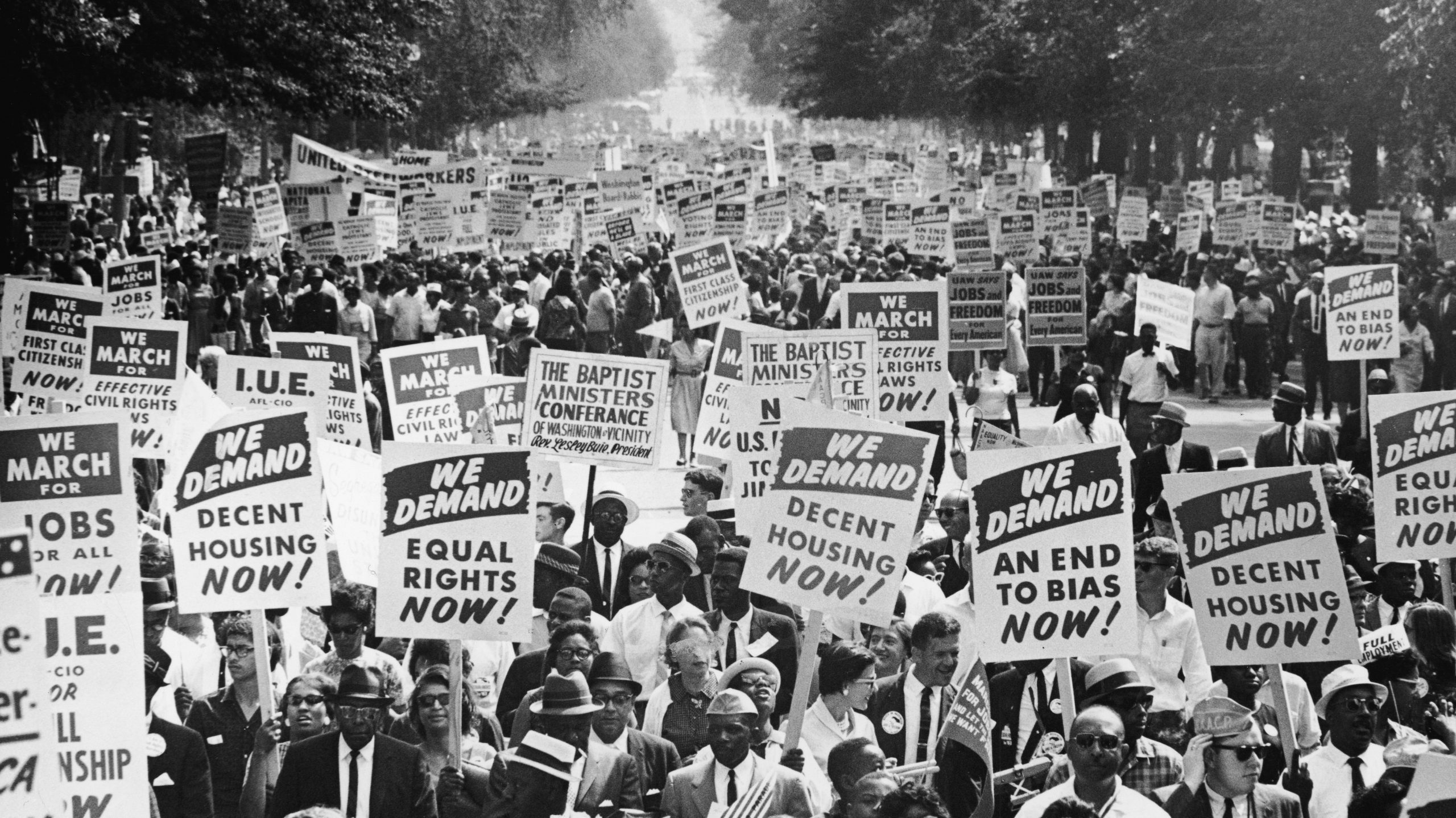
Before the Vietnam War and Civil Rights Movement, American support for and opposition to the use of military force as an instrument of American foreign policy did not break down so easily along partisan lines.
Some American liberals, of course, always opposed war on moral grounds, but some conservatives joined in opposition, albeit for different reasons—isolationists who felt American involvement in foreign wars was none of our business and fiscal conservatives who found war economically wasteful.
Many conservatives, of course, saw the military as a useful tool to protect and expand American business interests. But many liberals, inspired by how World War II saved the world from fascism, saw the military playing a key role in freeing oppressed people, and believed in an American moral obligation to use it for that purpose.
The Civil Rights Movement’s pacifist influence on the antiwar movement of the 1960s, coupled with revelations about rampant misuse of the American military and CIA, however, seem to have soured the American left’s taste for human rights intervention.
By 2003, despite Saddam Hussein’s unmentionable brutality toward his own people, nearly every prominent liberal united against the Iraq War, many for admirable reasons, the Bush administration’s raging incompetence among them.
Only lonely Christopher Hitchens enthusiastically supported the war from the left, urging it on to liberate Iraq from Saddam Hussein’s tyranny. The Democrats in Congress who voted to authorize the war did so more out of craven worries about their political careers in light of the war’s then sky-high public support than out of any zeal for human-rights intervention.
Liberal opposition to military force has not only persisted, it appears to have expanded to include the homeland.
After Russia invaded Ukraine, a Quinnipiac University poll asked Americans whether they would stay and fight if a foreign power invaded the United States. Only 55 percent said they would stay and fight, while 38 percent said they would leave.
The numbers widen significantly along partisan lines, with 68 percent of Republicans and 57 percent of independents saying they would stay to fight off an invasion.
But 52 percent of Democrats said they would flee the country rather than stay and defend it.
Perhaps that majority on the left indicates liberal contempt for the nation’s moral flaws, a belief that it hasn’t earned their defense. It might reflect a feeling that liberals, especially those with low incomes, don’t believe they possess something worth fighting for.
It might, however, also point to how a liberal embrace of a pacifist foreign policy and domestic nonviolent resistance has resulted in a deep, broad discomfort with violence, including in sports and even self-defense.
Minorities of all stripes tend to skew liberal. And sadly, minorities are far more likely to find themselves the targets of hate crimes, a steadily increasing problem in the United States. This makes them more likely to need self-defense trainings that they may find ideologically or even morally objectionable on general principles.
People who believe the use of force or violence is inherently wrong will find their personal safety at great risk when they encounter someone with contempt for those values. Criminals, politically motivated or not, can take advantage of liberal pacifism and attack them with relative impunity.
That is where pacifism fails.
Pacifism Offers No Defense Against Violent Crime
The great community organizer Saul Alinsky ruminates on pacifism in the “Of Means and Ends” chapter of his classic Rules for Radicals book. The effectiveness of nonviolence depends on a context in which it might succeed, he writes.
“Gandhi’s passive resistance would never have had a chance against a totalitarian state such as that of the Nazis,” writes Alinsky. “It is dubious whether under those circumstances the idea of passive resistance would even have occurred to Gandhi.”
Alinsky goes on to quote George Orwell: “It is difficult to see how Gandhi’s methods could be applied in a country where opponents of the regime disappear in the middle of the night and are never heard of again.”
The Civil Rights Movement’s success depended on nonviolent resistance, however. Violence would have provoked a ferocious federal government crackdown that the wider American public would have demanded, argues Alinsky.
Besides, as Martin Luther King said, “If you use a rock and a bottle to go after a man with a machine gun, you are not being violent, you are being foolish.”
Instead, with legislation on its side, the courts on its side, presidential administrations (however cautiously) on its side, and the American media coverage bringing acts of stunning brutality against peaceful protesters to a horrified public, nonviolent resistance offered the only hope to usher into reality the Civil Rights Movement’s most sought-after changes.
Such circumstances do not exist in most hate crimes, and would render a nonviolent reaction pointlessly self-defeating and perhaps suicidal.
We should always strive to find nonviolent solutions to the problems we face. We should exhaust all nonviolent options that offer a chance of success before we resort to force. But we cannot deter or redirect all violent criminals through nonviolent means, as Rory Miller has argued in his many books.
As Alinsky says, we need to choose the means that will lead to our desired end. If we wish to survive a violent assault, we simply may need to use force to defend ourselves. It behooves us to learn self-defense skills and grow comfortable using them in case we ever face that eventuality.
Replacing the Effluent

Unfortunately, we often must convince the people who most need our help that we will provide them with a reasonably safe (considering the hazards involved with realistic self-defense training) space for them to learn.
Reaching Out to Vulnerable Populations
Instructors might start by making overtures to groups that would most benefit from martial arts training. Find organizations and associations of those targeted groups and offer to provide them with free self-defense seminars. This may allow you to build bridges to communities that might feel suspicious of you or unsure of their capacity to learn what you teach.
Flooding the martial arts space with decent, deserving people can do just as much good as excising from it the bad. And who knows? Maybe respectful interaction can bring about positive changes in the latter.
Understanding How Language Matters
Times change, and language with it, sometimes with frustrating speed or in baffling directions. That may lead instructors to misspeak. They may not always realize when their words have hurt someone, however unintentionally.
Thus, instructors should constantly evaluate what they have taught their students and the language they used to do so, then ask how it might have made them feel.
It’s not so philosophically different from the constant evaluation martial artists need to undertake with techniques and tactics. Just as we must identify what works and what doesn’t in self-defense, we must learn what works and what doesn’t when educating our students.
Those who fail to adapt to changing circumstances will find that the world has left them behind, and their schools will not survive.
Shutting Down Breaches of Decency
Sadly, an elemental criterion of martial arts instruction bears repeating: Instructors must meet and set clear standards for behavior in and out of the classroom, and enact sanctions quickly and firmly when breaches occur.
Instructors should stress that sparring partners are classmates, not assailants or enemies, and charge them with the obligation to help each other learn.
Instructors must demand that students live by this ethical code: that they may only use martial arts in self-defense, and only after they have exhausted all realistic, nonviolent options.
Even the best instructors cannot see every breach of these protocols. Students and parents need to know they can trust you to resolve any issues you did not notice when they bring them to your attention.
Parents who watch classes may see how other students interact with their children and should bring concerns to the instructor. (If they witness an instructor deliberately violating these imperatives, or propagating poisonous beliefs, they should immediately take their children to better martial arts schools.)
When students or their parents come to you with complaints, involve them in forming a solution to ensure it satisfies them. Ask, for example, if they want an apology from the offending student—and if they do, ensure it arrives sincerely if that student wants to continue to receive instruction.
Nobody wants to lose a student, but a student who cannot accept the responsibility that comes with martial arts skills will damage your reputation and community and drive away your other students.
Overcoming Body Dysmorphia
Anyone who has never felt welcome to participate in sports or feels disillusioned by their athletic experiences may believe they lack the basic physical attributes necessary for self-defense training.
Because they probably lack prior training experience, they may make assumptions based on what they’ve seen in the media—martial arts movies that make the skills look impossibly easy to master, and mixed martial arts competitions that make the prospect of training seem impossibly brutal. Anyone who feels traumatized after surviving a physical assault may see the latter as especially unappealing—why would they want to voluntarily subject themselves to such an experience again?
Instructors, then, should set realistic expectations for martial arts training. It may take a couple of years for some students to absorb their training enough to effectively apply it, for example. The skills and training take enormous effort, but should not involve unnecessary pain or injury—and they come with priceless rewards.
It helps to devise a curriculum that introduces basic techniques and gives students time to master them before introducing more difficult or intricate ones—a curriculum that improves physical skills and fitness at a feasible rate.
Then, so long as students keep trying, teachers should allow students to improve at their own pace, encouraging them to work harder and smarter, but with no pressure to reach milestones at an unrealistic speed. Instructors and students all must exercise patience and enjoy the process.
The Hardest Lesson: Ending Entitlement
Perhaps the most important lesson martial artist instructors can teach our students—that any teacher can teach any student—is one of the hardest that life has to offer: As Neil deGrasse Tyson says: “The universe owes you nothing.”
You are not entitled to money, success, love, sex, happiness, fulfillment, justice, fairness, stability, or even answers. Everything you want in the world, you must earn.
Nothing in this world is free. You either pay now, or you pay later. To pay later will always cost you more.
Anyone who tries to tell you otherwise is selling you a scam.
Gifts and inheritances, from beauty and talent to material wealth, are not accomplishments. Too many people mistake them for such, both those born to them and those not so fortunate.
Anyone who believes otherwise is scamming themselves.
The self-deluded often cry the loudest about the fictional persecutions they imagine they face.
If ever anyone could justify kink-shaming, it is for the irrational, entitled crybaby assholes who make a fetish of their phony victimhood and self-pity.
As martial arts instructors, we can start teaching these lessons by turning our dojos into the miniature cosmos that Joe Hyams described in Zen in the Martial Arts. We can tell our students that they are not entitled to belt-rank promotions, and set rigorous but realistic standards for earning them. Anything less than that cheats our students and sets them up for failure in both self-defense and in navigating the world’s constant challenges.
Taking Out the Trash: Managing the Counter-message
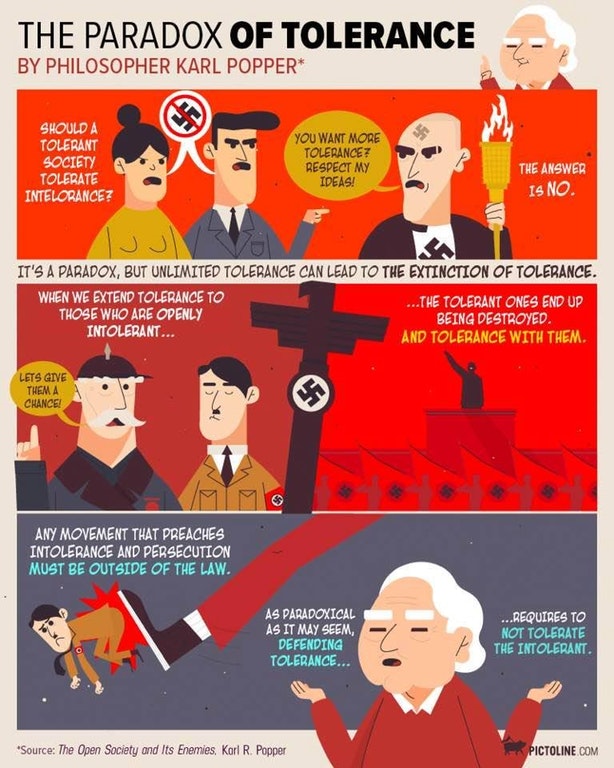
The First Amendment rightly protects abhorrent people and speech. But it also protects people who speak to the better angels of our nature, and it is a right we need to exercise—to win in the marketplace of ideas, we first need to carve out a place in it for ourselves.
That may include calling out specific perpetrators of hate speech in the martial arts.
This essay has not done so, but not out of fear of retaliation. It’s not as if such people will read this blog, or that they read at all. We need not worry about them showing up in our hometowns and physically confronting us in public. And who cares if they respond online? It’s not like they’re going to hurt our feelings.
Hate groups thrive when they receive attention—any attention—so they love to provoke outrage and conflict. Hate groups even love bad publicity, as it reinforces their pathetic delusions of the mass conspiracies lined up against them. Confrontations drive website traffic and foster their recruiting efforts.
This can make antifi’s efforts counterproductive, however satisfying they may feel in the moment.
Thus, the Southern Poverty Law Center advises against clashing with them and encourages more effective alternatives, like holding counterdemonstrations in different parts of town to draw media attention toward sane, positive reactions.
The same principle may apply in the digital world.
Others may disagree. They cannot let the hideous rhetoric of heinous people pass uncontested. Trained fighters everywhere will understand such an honorable impulse. We simply need to understand the risks of blowback before we proceed upon that avenue. We must heed Alinsky’s warnings about the effectiveness of our tactics just as much as pacifists do.
But confrontation is a form of counter-marketing. And that’s what it comes down to, regardless of the method: Ridding the martial arts of hate groups certainly involves successfully promoting an explicitly welcoming, substantively better way of conducting ourselves and training our students, then living up to that image.
We should waste no time in doing so.
Too many people need our help, and they don’t yet know how much we want to provide it.


